Coating Inspection | Quality and Corrosion Protection | Nirvaan
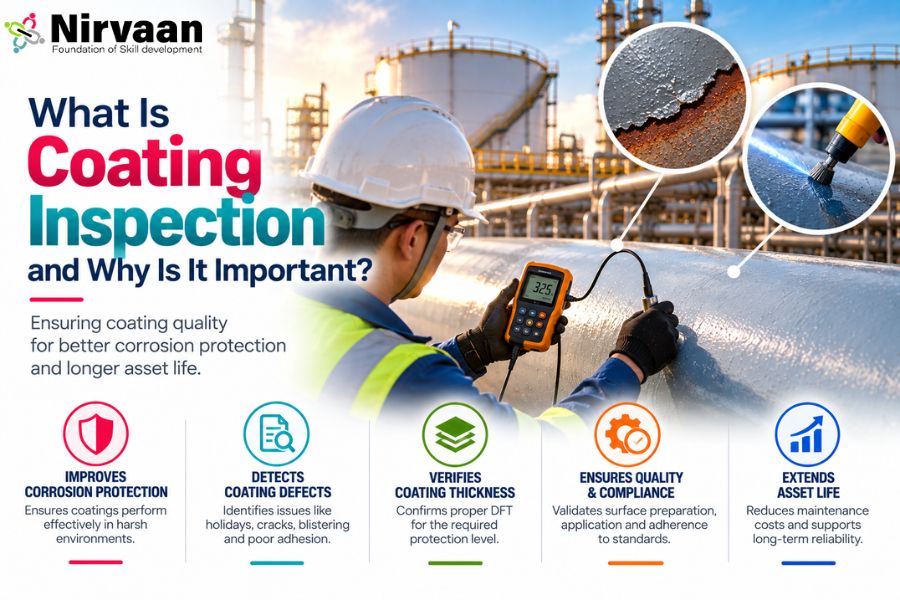
Coating Inspection is the systematic examination of a protective coating to determine whether it has been properly prepared, applied and maintained in accordance with specified requirements. Industry often applies coatings to steel and other materials to protect them from moisture, chemicals, salts, abrasion and other environmental factors that can cause deterioration.

A coating may look good to the eye but may have weaknesses that can compromise its ability to protect. Poor surface preparation, wrong film thickness, trapped contaminants, poor application conditions or insufficient cure can all impact the expected service life of a coating system.
Coating inspection is therefore an important quality control activity in industrial asset protection.
Why Are Protective Coatings Used?
Protective coatings create a physical barrier between a material and its surrounding environment. For metallic structures, this barrier can reduce direct contact with water, oxygen, chemicals and other substances that contribute to corrosion.
Coatings are used across numerous applications, including pipelines, storage tanks, offshore structures, bridges, industrial equipment and steel infrastructure.
However, the performance of a coating depends on much more than the product selected. Surface condition, environmental conditions, application technique, coating thickness and curing all influence the final result.
What Does Coating Inspection Involve?
The professional inspection of a coating may involve several stages from before the coating is applied to after the coating has been applied.
An inspector can inspect the condition of the substrate, verify surface preparation, verify environmental conditions and verify that the specified coating system is being applied correctly.
After application, problems such as insufficient thickness, pinholes, runs, sags, contamination, cracking or other defects can be detected by measurements and visual inspections.
The exact inspection requirements are set by the coating specification, asset, environment and relevant project standards .
Why Is Surface Preparation Important?
Surface preparation is one of the most important stages of a coating project. Dirt, oil, grease, rust, mill scale, salts and other contaminants can interfere with adhesion between the coating and substrate.
Methods such as abrasive blasting can be used to obtain the required surface condition and profile.
Coating inspection Before coating starts, the prepared surface can be inspected for cleanliness, surface profile and other specified requirements.
Poor preparation can result in premature coating failure even when a high-quality coating material is used.
How Is Coating Thickness Checked?
Coating thickness is an important quality parameter because a coating that is too thin may not provide the intended protection, while excessive thickness can also create problems depending on the coating system.
Dry film thickness, commonly referred to as DFT, can be measured using appropriate instruments after the coating has been applied.
In coating inspection, the measured values can be compared with the requirements given in the project. The recording of these measurements provides useful evidence that the application has reached the required thickness range.
What Are Common Coating Defects?
Coating defects can occur during surface preparation, application, curing or subsequent service.
Common problems include pinholes, blistering, cracking, peeling, runs, sags, dry spray and inadequate adhesion. Some defects may be visible, while others require specialised testing equipment to identify.
Identifying defects at an early stage gives the responsible team an opportunity to investigate the cause and carry out corrective work before the asset enters long-term service.
What Is Holiday Testing?
Holiday testing is a way to detect discontinuities like pinholes or small breaks in a coating system. Such discontinuities can expose the underlying material to the ambient environment.
Low-voltage or high-voltage test equipment can be used depending on the coating and application.
Holiday detection is particularly relevant when continuous protective coverage is needed (for example, on some pipelines, tanks and other corrosion-sensitive assets).
How Do Environmental Conditions Affect Coating Application?
Temperature, humidity, substrate temperature and dew-point conditions can influence coating application and curing.
If a surface is contaminated with moisture or condensation, coating adhesion and performance may be affected. Similarly, unsuitable temperature or humidity conditions can interfere with the curing process of certain coating systems.
A competent inspection process therefore considers environmental conditions before and during application rather than assessing the finished coating alone.
What Are the Benefits of Professional Coating Inspection?
A structured Coating Inspection approach can help organisations to find quality problems before they become costly failures. It provides a way of checking that preparation, application and finished coating requirements have been met.
A good inspection can also improve documentation and maintenance planning. Keeping inspection records throughout the life of a project gives organisations valuable information for future asset assessments and coating maintenance decisions.
Such practices can allow for improved reliability and more predictable maintenance requirements for large industrial assets.
Who Performs Coating Inspections?
Coating inspectors require knowledge of surface preparation, coating materials, application methods, inspection instruments and relevant industry requirements.
Professional training can help inspectors develop the ability to recognise coating defects, take appropriate measurements and document findings accurately.
Certification-based education can also provide a structured pathway for professionals seeking to develop specialist expertise in industrial coating inspection.
Frequently Asked Questions
What is Coating Inspection?
Coating Inspection is the process of checking a protective coating system before, during and after application to verify its quality and compliance with specified requirements.
Why is Coating Inspection important?
It helps identify preparation, application and coating defects that could reduce protection and contribute to premature deterioration of the underlying asset.
What is DFT in Coating Inspection?
DFT means Dry Film Thickness. It refers to the thickness of a cured coating and can be measured using suitable inspection instruments.
Closing Insights – Nirvaan’s Perspective on Coating Inspection
At Nirvaan Foundation of Skill Development, we recognise that effective coating protection depends on skilled people who understand both the technical requirements and practical realities of industrial applications. Coating inspection is therefore an important skill within the wider field of corrosion prevention and asset protection.
Nirvaan supports professional development through specialised training designed around industry requirements, including AMPP-focused Coating Inspector certification pathways. Through practical learning, technical education and skill development, Nirvaan aims to help professionals build the competence needed to assess coating quality and contribute to better corrosion-control practices.
By developing capable inspection professionals, Nirvaan seeks to support industries in protecting valuable assets, improving maintenance practices and building a stronger corrosion-control workforce in India.
Image Reference: Magnific
Disclaimer: All trademarks, logos, and brand names are the property of their respective owners. All company, product, and service names used in this website are for identification purposes only. Use of these names, trademarks, and brands does not imply endorsement.