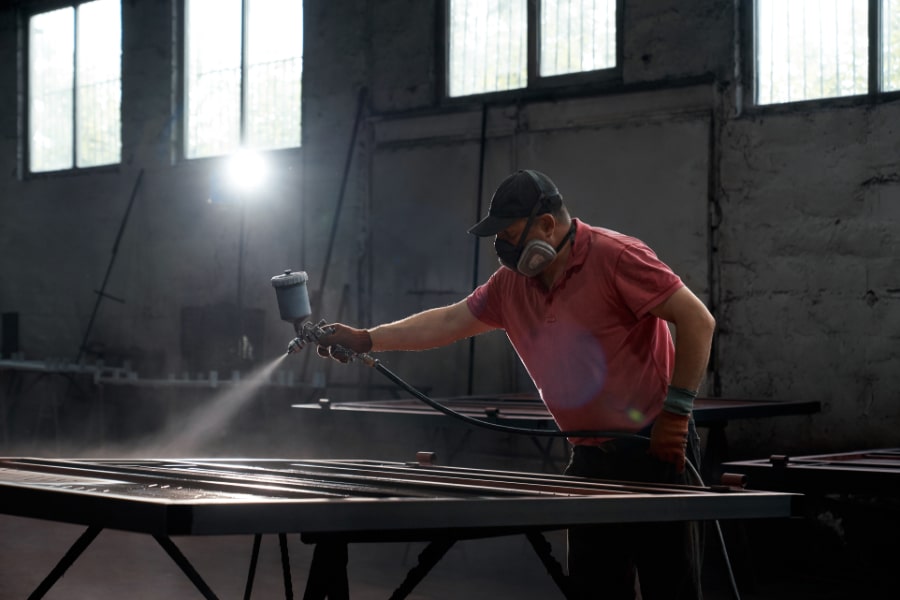
Applicators use specialized tools and techniques—such as spray guns, brushes, and rollers—to apply coatings with precision according to industry standards. They must understand surface preparation, coating types, safety protocols, and quality control procedures to ensure long-term protection.

Trained coating applicators are in high demand for industrial projects where surface integrity and corrosion protection are critical. They can work with contractors, infrastructure companies, and maintenance teams, both in India and internationally.
Have questions about corrosion awareness, training programs, or collaborations? Check out our most common queries below.
An industrial coating applicator prepares surfaces and applies protective coatings to materials such as metal and concrete in industrial environments. The work involves selecting and using appropriate tools, including spray equipment, brushes and rollers, according to project requirements. Applicators must also follow technical specifications, safety procedures and quality-control practices to help achieve a durable finish.
Surface preparation removes contaminants, loose rust and other material that may interfere with coating adhesion. Depending on the project, preparation may involve cleaning, abrasive blasting or other approved methods. Proper preparation helps the coating bond effectively to the substrate and reduces the risk of premature peeling, blistering or coating failure.
Industrial coating applicators may work with primers, epoxy coatings and polyurethane coatings, depending on the application and specified protection requirements. Primers can support adhesion and corrosion protection, while other coating layers may provide chemical resistance, durability or weather protection. The correct product and coating system must be selected according to the substrate, service environment and manufacturer's technical instructions.
The equipment depends on the surface, coating material and project conditions. Common tools include spray guns, brushes, rollers and equipment used for surface cleaning and preparation. Applicators must understand correct equipment operation, maintenance and safe handling to achieve consistent coverage while reducing application defects and unnecessary material waste.
Industrial coating work may involve chemicals, airborne particles, pressurised equipment, vapours and other workplace hazards. Applicators should use the appropriate personal protective equipment, follow site-specific safety procedures and ensure that ventilation and environmental controls meet the relevant requirements. They must also follow product safety information and applicable regulations when handling, applying and storing coating materials.
Trained industrial coating applicators can pursue opportunities with coating contractors, infrastructure companies and industrial maintenance teams. Potential work environments include oil and gas facilities, marine projects, power plants, manufacturing units and major infrastructure developments. Career progression depends on practical competence, relevant training, safety performance, experience and the requirements of individual employers.
Nirvaan’s Industrial Coating Applicator programme focuses on practical skills associated with surface preparation, coating materials, application equipment, personal protective equipment and safety compliance. These areas provide a useful foundation for people interested in industrial coating work. Beginners should review the available programme details and confirm the training format and entry requirements before enrolling.
WhatsApp us