
Types of Corrosion | Early Detection and Prevention | Nirvaan
Corrosion is a complex degradation process happening in metals and metallic structures when they are in contact with the environment. Corrosion does not always develop in the same way. The nature of deterioration will depend on the environmental conditions, materials, stresses and contaminants. Therefore, it is important to know the types of corrosion to be able to select suitable measures for inspection, prevention and control.
Understanding the characteristics of each corrosion mechanism can help industries that work with pipelines, storage tanks, marine structures, machinery and infrastructure identify potential risks and take appropriate action before damage becomes severe.
What Determines the Type of Corrosion?
How corrosion manifests itself depends on a number of factors. These include type of metal, environment, temperature, moisture, chemical exposure, stress and contact with other materials.
Some are somewhat uniform over large areas; others are very localised. Therefore a small visible defect may be a symptom of a much deeper problem below.
Awareness of types of corrosion enables engineers and inspectors to evaluate deterioration relative to its likely mechanism and not treat all corrosion problems as equal.
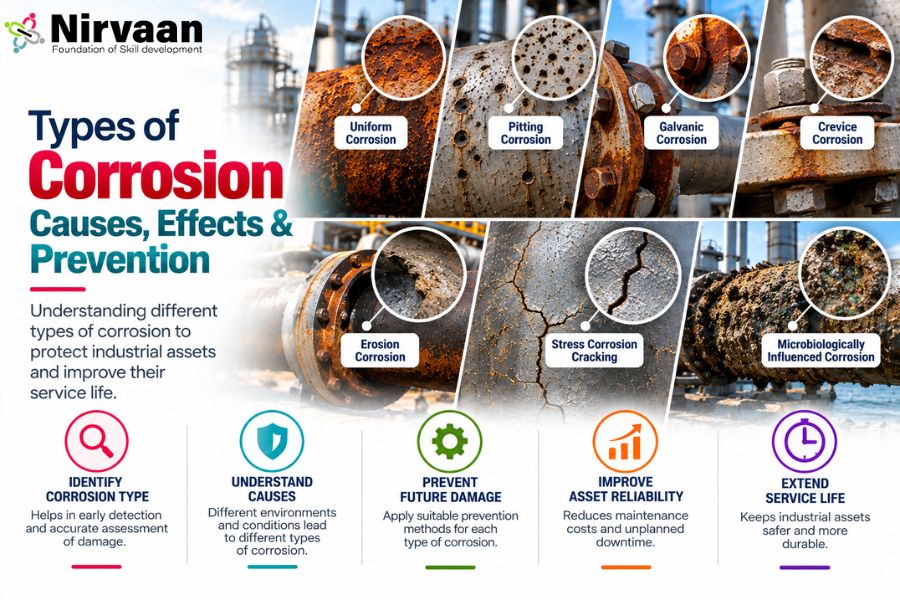
What Is Uniform Corrosion?
Uniform corrosion occurs relatively evenly across a metal surface. The material gradually becomes thinner as corrosion progresses across a broad area.
This form can sometimes be easier to identify and monitor because deterioration is distributed across the exposed surface. However, significant material loss over time can still affect the strength and service life of an asset.
Appropriate protective coatings, material selection, environmental controls and regular inspections can help manage uniform corrosion.
What Is Pitting Corrosion?
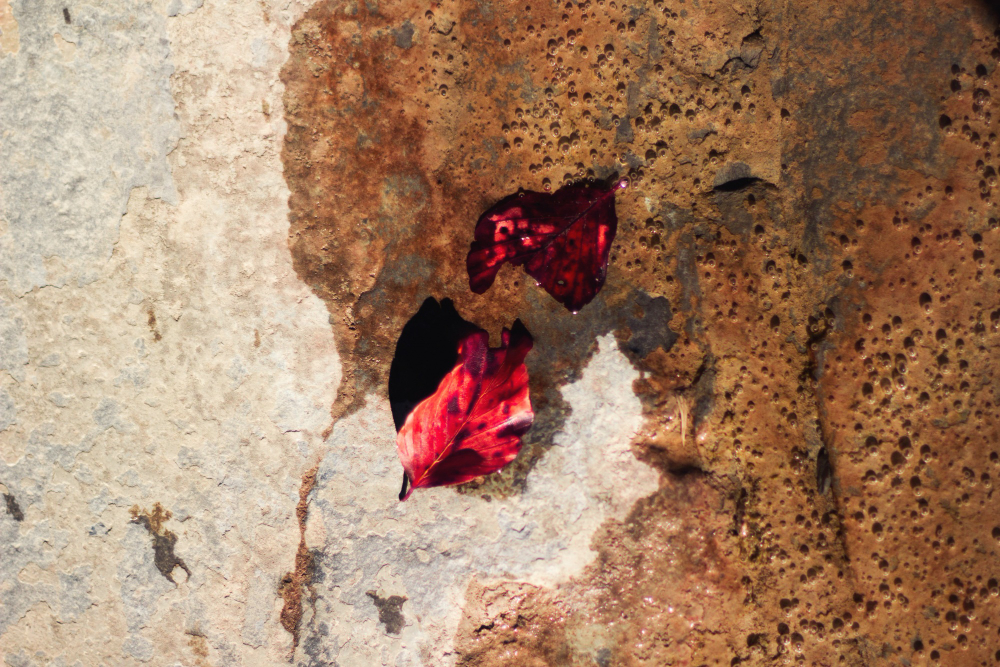
Pitting corrosion is a highly localised form of deterioration in which small cavities or pits develop on a metal surface. Although the overall surface may appear relatively intact, individual pits can become deep.
This makes pitting particularly important for assets where structural integrity depends on maintaining sufficient wall thickness. Pipelines, tanks and other equipment exposed to aggressive environments can be vulnerable.
Early detection and suitable monitoring are important when managing this form of corrosion.
What Is Galvanic Corrosion?
Galvanic corrosion can occur when two dissimilar metals are electrically connected while exposed to an electrolyte such as water or seawater.
The difference in electrochemical behaviour between the metals can cause one metal to become more susceptible to corrosion. The severity depends on factors such as the materials involved, their relative surface areas and the surrounding environment.
Material compatibility, suitable isolation techniques and appropriate design can help reduce galvanic corrosion risks.
What Is Crevice Corrosion?
Crevice corrosion develops in confined areas where stagnant moisture or corrosive substances can become trapped. Typical locations can include joints, overlaps, fasteners, seals and other narrow gaps.
Conditions within a crevice can become different from those on the surrounding exposed surface, creating an environment that promotes localised deterioration.
Good design, appropriate sealing, suitable materials and effective inspection can help reduce the risk.
What Is Erosion Corrosion?
Erosion corrosion occurs when the combined effects of corrosive fluids and movement cause accelerated deterioration of a material surface.
High fluid velocity, turbulence, suspended particles and changes in flow direction can contribute to the problem. Components such as pipes, bends, pumps and valves may require particular attention in relevant operating environments.
Managing flow conditions, selecting appropriate materials and applying suitable protective measures can support corrosion control.
What Is Stress Corrosion Cracking?
Stress corrosion cracking involves the interaction of tensile stress and a susceptible material within a particular corrosive environment. Cracks can develop and grow even when the overall amount of visible corrosion appears limited.
This mechanism can be especially significant for critical components because cracking may progress without extensive general surface deterioration.
Material selection, stress management, environmental control and appropriate inspection practices can form part of a prevention strategy.
What Is Microbiologically Influenced Corrosion?
Microbiologically influenced corrosion, often referred to as MIC, occurs when microorganisms contribute to corrosion processes.
It can occur in environments where suitable nutrients, moisture and conditions allow microorganisms to grow. Pipelines, tanks and water systems may require attention where MIC is a potential concern.
Identifying the underlying conditions and combining inspection, monitoring and appropriate treatment can help manage this form of deterioration.
How Can Different Types of Corrosion Be Prevented?
There are no universal solutions to all types of corrosion. Prevention is effective when based on understanding of material, environment and probable corrosion mechanism.
Protective coatings can provide a barrier to environmental exposure . Cathodic Protection may be suitable for some metallic structures . Corrosion management may also involve material selection, drainage, environmental controls, inspection and monitoring.
As a rule, it is better to be proactive rather than wait until there is substantial decline before acting.
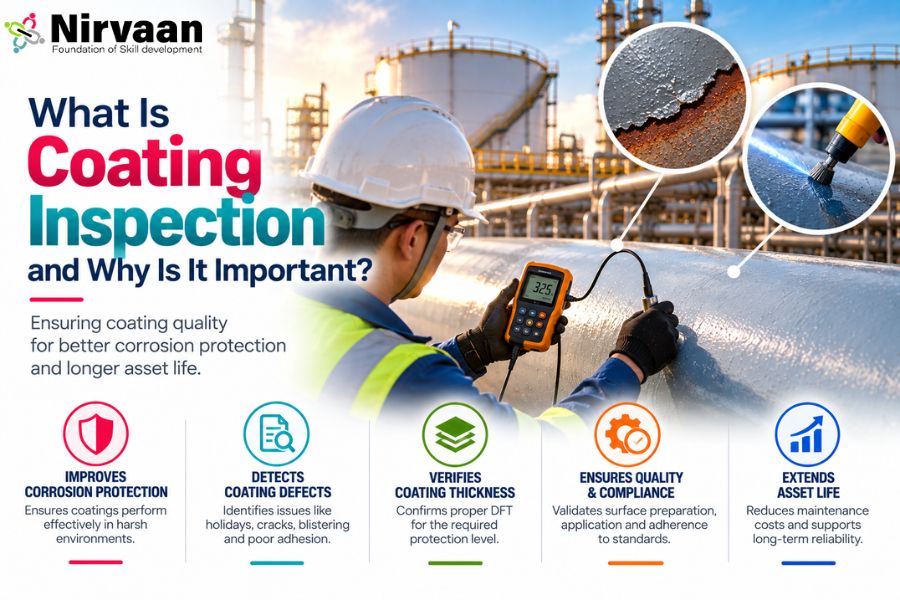
Why Is Corrosion Inspection Important?
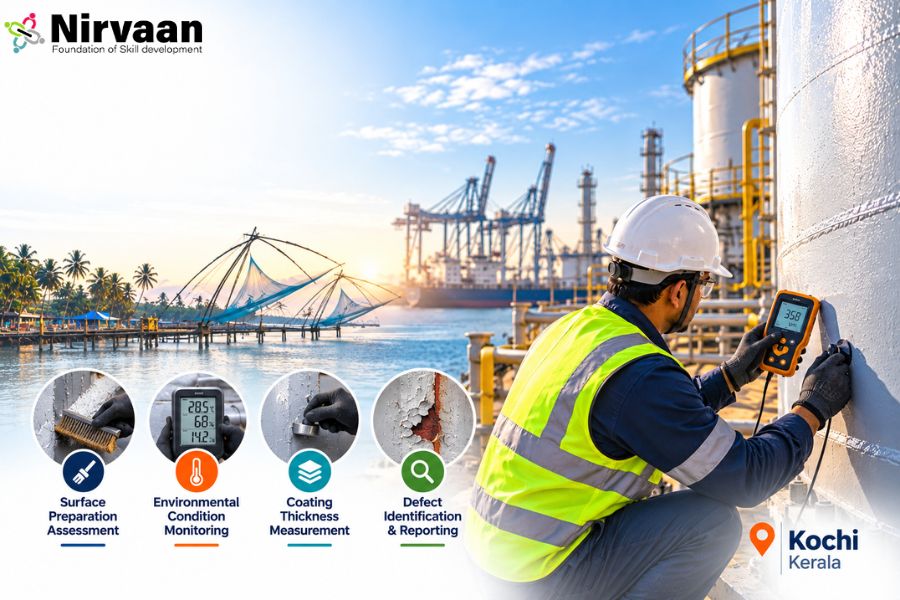
Understanding the corrosion mechanism that is occurring can impact the inspection and maintenance of the asset. Visual inspection may be appropriate for identifying some surface conditions, but specialised techniques may be required for the identification of localised damage, cracking or material loss.
Professionals need the appropriate technical knowledge to interpret the inspection findings and to distinguish among different types of corrosion.
Thus, training is of great importance for the development of skills necessary for effective assessment and prevention of corrosion.
Frequently Asked Questions
What are the most common types of corrosion?
Common forms include uniform, pitting, galvanic, crevice, erosion, stress corrosion cracking and microbiologically influenced corrosion.
Which type of corrosion creates small holes in metal?
Pitting corrosion creates small, localised cavities that can become deep and potentially affect the integrity of a component.
What causes galvanic corrosion?
Galvanic corrosion can occur when dissimilar metals are electrically connected in the presence of an electrolyte.