
Certified Coatings Inspector Certification | Advanced Inspection Skills
The Certified Coatings Inspector Certification (CIP Level 2) is designed for professionals who want to build on foundational coating-inspection knowledge and develop more advanced inspection capabilities. Protective coatings are used across pipelines, storage tanks, offshore structures, industrial equipment and other assets where corrosion can threaten performance and service life.
With the increasing complexity of coating systems, inspectors can no longer rely on visual assessment alone. They could need to understand specialised application methods, environmental controls, surface preparation, inspection documentation and testing techniques. Training is available in these areas through the Certified Coatings Inspector Certification (CIP Level 2).
What Is CIP Level 2?
The Certified Coatings Inspector Certification (CIP Level 2) is an intermediate level coating inspection path building upon knowledge developed in CIP Level 1. The course, as said by AMPP, offers advanced instruction in the documentation and execution of nondestructive and destructive inspection of liquid and non-liquid coatings on various substrates. The programme involves classroom learning, hands-on activities, group exercises and case-based training.
For professionals moving beyond basic inspection responsibilities, the Certified Coatings Inspector Certification (CIP Level 2) can provide a broader understanding of complex coating systems and inspection requirements.
Who Is the Certification Designed For?
The Certified Coatings Inspector Certification (CIP Level 2) is for coating inspectors, basic coatings inspectors, QA/QC personnel, maintenance and project engineers, contractors and applicators. AMPP recommends successful completion of CIP Level 1 as the basic building block for the Level 2 course.
The pathway can therefore suit professionals who already have exposure to coating inspection and want to develop their technical responsibilities further.
What Advanced Skills Does CIP Level 2 Cover?
A major focus of the Certified Coatings Inspector Certification (CIP Level 2) is the ability to work with more advanced inspection requirements. AMPP includes environmental controls, inspection, job-site specifications, centrifugal blast cleaning, waterjetting, surface preparation, liquid-applied coatings and destructive testing within the course content.
These subjects assist the inspectors in understanding the effect of preparation, application conditions and characteristics of the coating system on the quality of coatings.
Why Are Environmental Controls Important?
Environmental conditions including temperature, humidity, substrate temperature and other factors can have an effect on coating application and curing. The inspector needs to know how these conditions relate to coating specifications and whether work can be done under the measured conditions.
The Certified Coatings Inspector Certification (CIP Level 2) develops knowledge that can help professionals evaluate environmental controls as part of a structured inspection process.
What Is the Role of Advanced Testing?
Coating inspection can involve both nondestructive and destructive testing. Nondestructive techniques allow an inspector to evaluate characteristics without significantly damaging the coating, while destructive methods can provide information through controlled testing.
Understanding when and how appropriate testing methods are used is an important part of advanced inspection practice. The Certified Coatings Inspector Certification (CIP Level 2) specifically includes both forms of inspection within its course content.
How Does CIP Level 2 Build on CIP Level 1?
CIP Level 1 provides foundational coating-inspection knowledge. Level 2 takes that foundation further by introducing more complex inspection situations, specialised application methods and advanced testing.
AMPP states that successful completion of the CIP Level 1 course is required for its Level 2 course, while an active Basic Coatings Inspector certification is strongly recommended. AMPP also lists two years of verifiable coatings-related work experience as an experience requirement for certification.
This progression allows professionals to develop their capabilities alongside practical industry experience.
What Is the Certification Process?
The Certified Coatings Inspector Certification (CIP Level 2) pathway includes eligibility check, completion of required training, preparation for the examinations and completion of the certification requirements. The Level 2 assessment consists of theory and practical exams, AMPP said.
Currently the AMPP lists the certification as valid for three years after which re-certification is required. Requirements may be subject to change and candidates should check the latest information prior to enrolment.
How Can CIP Level 2 Support Professional Development?
The Certified Coatings Inspector Certification (CIP Level 2) can help professionals demonstrate specialised knowledge in coating inspection. It may be relevant to roles involving quality control, coating inspection, maintenance and industrial asset protection.
Career progression depends on experience, employer requirements, project responsibilities and additional professional development. Certification should therefore be viewed as one part of a wider professional pathway rather than a guarantee of a particular role.
Why Is Practical Training Important?
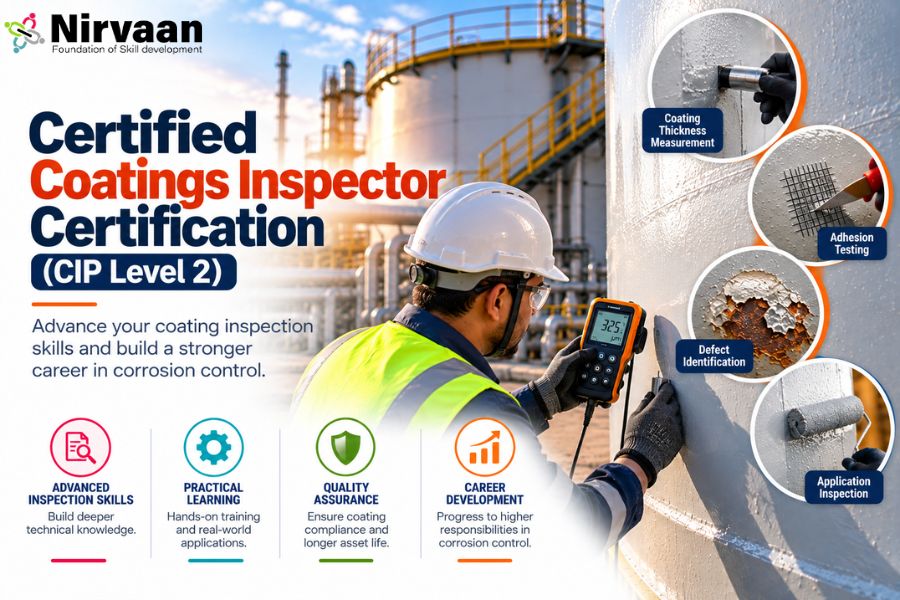
Coating inspection involves field conditions that cannot always be understood through theory alone. Inspectors may need to use instruments, assess surfaces, interpret measurements, identify defects and document findings accurately.
The Certified Coatings Inspector Certification (CIP Level 2) includes hands-on laboratories, group exercises and real-life case studies, according to AMPP. This practical emphasis can help learners connect technical concepts with situations they may encounter during industrial coating projects.
Frequently Asked Questions
What is the Certified Coatings Inspector Certification (CIP Level 2)?
It is an intermediate AMPP certification pathway that develops more advanced knowledge and practical skills in coating inspection.
Is CIP Level 1 required before CIP Level 2?
AMPP states that successful completion of the CIP Level 1 course is required for the Level 2 course, while an active Basic Coatings Inspector certification is strongly recommended.
What experience is required?
AMPP currently lists two years of verifiable coatings-related work experience for the Level 2 certification pathway. Candidates should verify the latest requirements before applying.
Closing Insights – Nirvaan’s Perspective on CIP Level 2
At Nirvaan Foundation of Skill Development, we recognise that advanced coating inspection requires a combination of technical understanding, practical capability and attention to quality. The Certified Coatings Inspector Certification (CIP Level 2) can be an important development pathway for professionals who want to progress beyond foundational coating-inspection knowledge.
Nirvaan supports industry-oriented learning through AMPP-focused training, practical education and skill-development programmes. Our aim is to help professionals strengthen their understanding of coating inspection and develop capabilities relevant to real industrial environments.
By supporting the development of trained coating professionals, Nirvaan seeks to contribute to stronger corrosion-control practices and better protection of industrial assets across India.
Image Reference: Magnific
Disclaimer: All trademarks, logos, and brand names are the property of their respective owners. All company, product, and service names used in this website are for identification purposes only. Use of these names, trademarks, and brands does not imply endorsement.