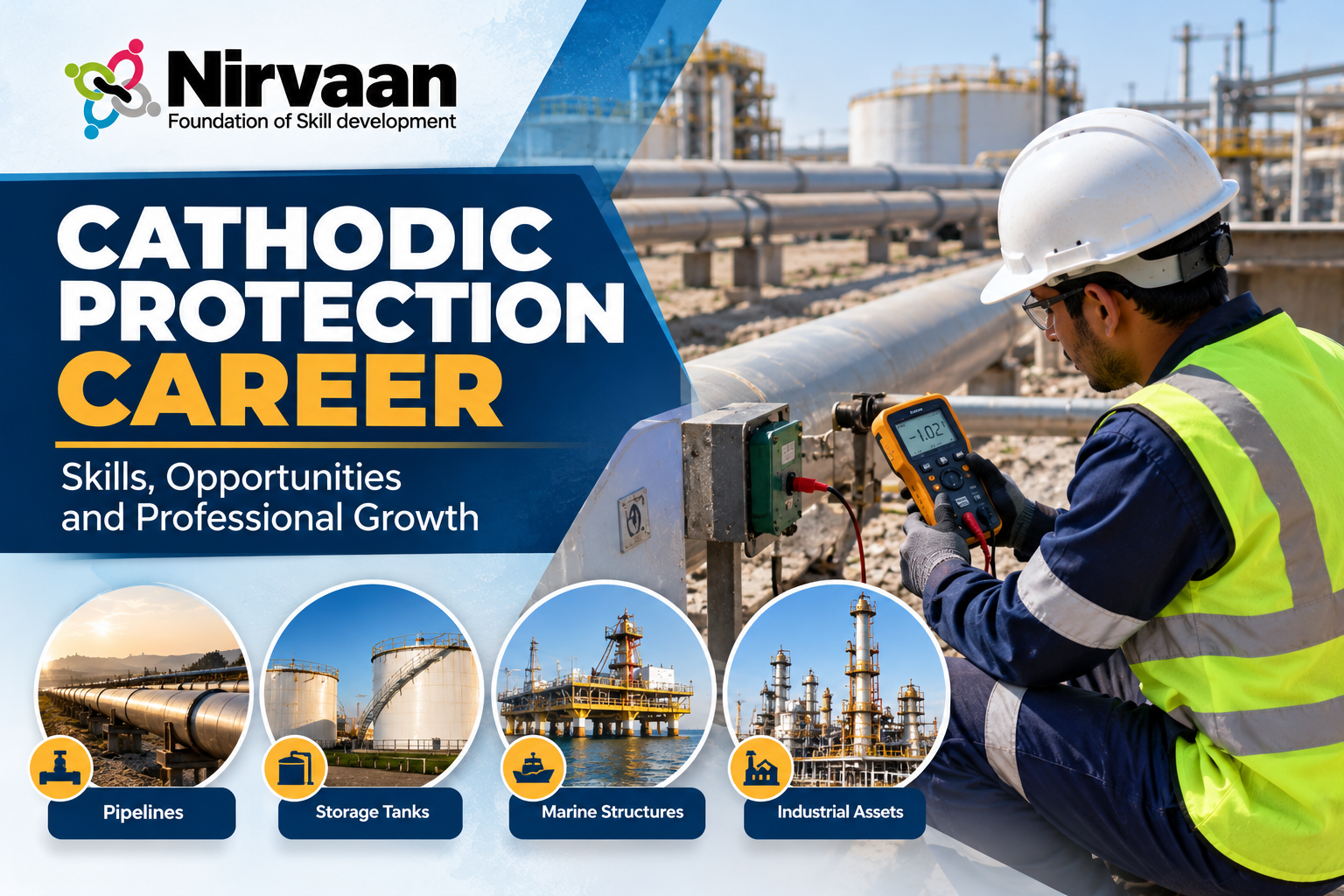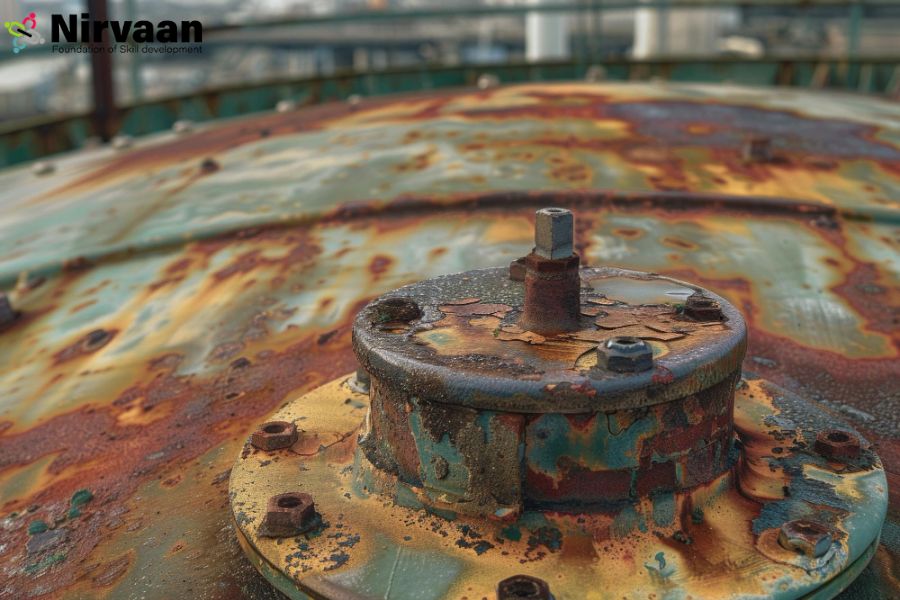

Cathodic Protection | Asset Protection and Longevity | Nirvaan
Metallic structures exposed to soil, water, seawater and other electrolytes can gradually deteriorate through electrochemical corrosion. For industries responsible for pipelines, storage tanks, offshore facilities and marine infrastructure, controlling this deterioration is an important part of asset management. Cathodic protection is one established method used to reduce corrosion on suitable metallic structures.

Rather than relying only on surface barriers, this technique uses electrochemical principles to reduce the tendency of the protected metal to corrode. When correctly designed and maintained, it can complement coatings and other corrosion-control measures.
What Is Cathodic Protection?
Cathodic protection is an electrochemical method of corrosion control in which the metallic structure to be protected is made the cathode of an electrochemical cell.
Normal corrosion is oxidation in anodic areas of a metal surface and loss of metal. The electrochemical conditions are changed by a protection system such that the corrosion of the protected structure is diminished.
The technique is particularly useful where metallic assets remain in contact with an electrolyte for long periods. However, the system must be appropriately designed according to the asset, environment and required protection criteria.
What Are the Main Methods?
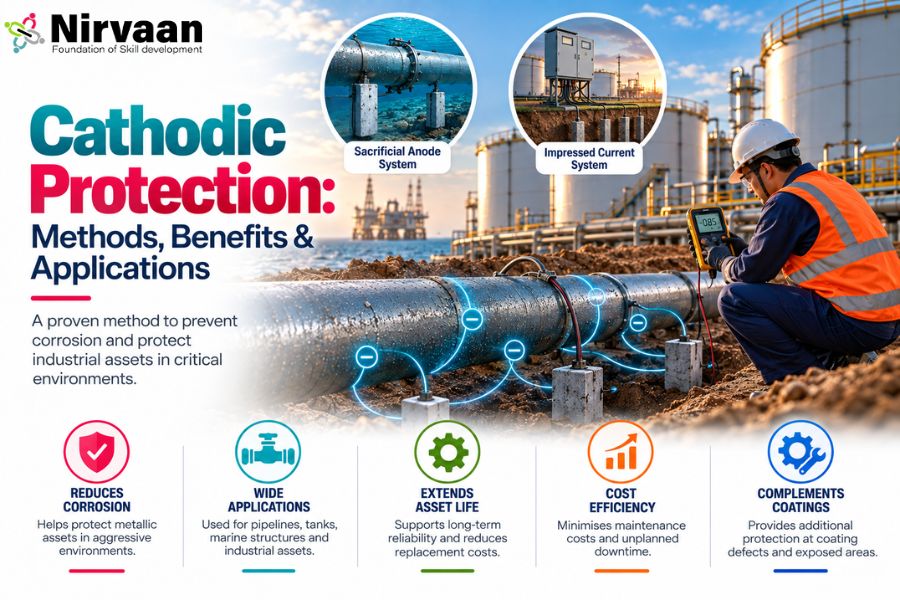
There are two main types of cathodic protection: sacrificial anode systems and impressed current systems. Both have the same basic goal, but their operating principles and applications are different.
Selecting a suitable method depends on factors such as asset size, electrolyte characteristics, required current, accessibility, design conditions and maintenance requirements.
How Does a Sacrificial Anode System Work?
The sacrificial anode system uses a metal that is more electrochemically active than the structure being protected. It is electrically connected to the structure . It is slowly eaten away while giving off protective current .
Zinc, magnesium and aluminium alloys can be used as anode materials for suitable applications. The choice is based on the environment and design specifications.
One advantage of this arrangement is that it usually doesn’t need an external DC power supply. It may therefore be suitable for some smaller structures or applications where a relatively simple protective arrangement is appropriate.
How Does an Impressed Current System Work?
An impressed current system uses an external DC power source to deliver current through anodes positioned in the surrounding electrolyte.
A rectifier is commonly used to convert and regulate the electrical supply. Compared with sacrificial systems, impressed current arrangements can provide greater control over current output and may be suitable for larger structures.
Because these systems involve powered equipment, regular monitoring and maintenance are important. Incorrect settings or equipment faults can affect system performance and the level of protection provided.
Where Is Cathodic Protection Used?
Many types of infrastructure that may corrode can be protected by cathodic protection. Common applications include subsea and land-based pipelines, particularly where the seawater or earth surrounding the pipeline acts as an electrolyte.
Other uses include storage tanks, offshore structures, marine installations, water systems and some industrial equipment.
The appropriateness of the technique depends on how the asset is built, the environment it is in and the conditions it operates under. Therefore, a detailed assessment should be performed before choosing a protection system.
How Does It Benefit Pipelines?
Pipelines can experience both internal and external corrosion. External deterioration may occur because of soil conditions, moisture, coating damage and other environmental factors.
In suitable pipelines cathodic protection can supplement an external coating system. The coating provides a physical barrier . The protection system can help reduce corrosion at appropriate exposed areas or coating discontinuities.
This combined approach can form part of a wider pipeline integrity-management programme involving inspection, monitoring and maintenance.
What Are the Main Benefits?
A cathodic protection system can reduce material loss due to corrosion and help ensure the long-term integrity of metallic assets with proper management.
Potential benefits include extending asset service life, reducing the need for premature replacement, supporting maintenance planning and complementing protective coatings.
However, these benefits depend on correct design, installation, commissioning, monitoring and maintenance. A system should not be considered effective simply because it has been installed.
Why Is Monitoring Essential?
Regular monitoring is an important part of cathodic protection management. Measurements can be used by professionals to see if the system is providing the desired level of protection.
Depending on the installation, professionals may evaluate structure-to-electrolyte potentials, current output and other pertinent operating parameters. Abnormal readings may indicate problems with anodes, cables, rectifiers, connections or environmental conditions.
Consistent records can also help teams identify changes in system performance over time and plan appropriate corrective action.
What Skills Do Professionals Need?
A professional working with cathodic protection must understand corrosion mechanisms, electrochemistry, electrical measurements, system components and field-testing procedures.
Practical experience is especially valuable as real installations can have different soil conditions, coating conditions, asset configurations and operating requirements.
Specialised training can help professionals to understand how the system behaves, interpret field measurements and apply appropriate corrosion control procedures.
Frequently Asked Questions
What is Cathodic Protection used for?
It is used to reduce corrosion on suitable metallic structures exposed to electrolytes, including pipelines, tanks, marine structures and offshore assets.
What are the two main types?
The two principal types are sacrificial anode systems and impressed current systems.
Does Cathodic Protection replace protective coatings?
No. It can complement coatings. Coatings provide a physical barrier, while electrochemical protection can provide additional protection at suitable exposed areas.
Closing Insights – Nirvaan’s Perspective on Cathodic Protection
Effective corrosion control at Nirvaan Foundation of Skill Development involves the right technology and the right trained personnel. Cathodic protection is a specialist field requiring particular importance to technical understanding, accurate measurement and practical field skills.
Nirvaan offers professional learning opportunities in the area of corrosion prevention and control. This includes AMPP-certified cathodic protection courses at the appropriate professional level. Nirvaan aims to equip professionals with practical training, industry-focused education and skill development that can be implemented in real industrial settings.
Nirvaan aims to build a better workforce and help protect, reliable and longevity of critical industrial assets in India by improving expertise in cathodic protection and related corrosion-control practices.
Image Reference: Magnific
Disclaimer: All trademarks, logos, and brand names are the property of their respective owners. All company, product, and service names used in this website are for identification purposes only. Use of these names, trademarks, and brands does not imply endorsement.